The Story of Areca Leaf — From Fallen Palm to Premium Plate
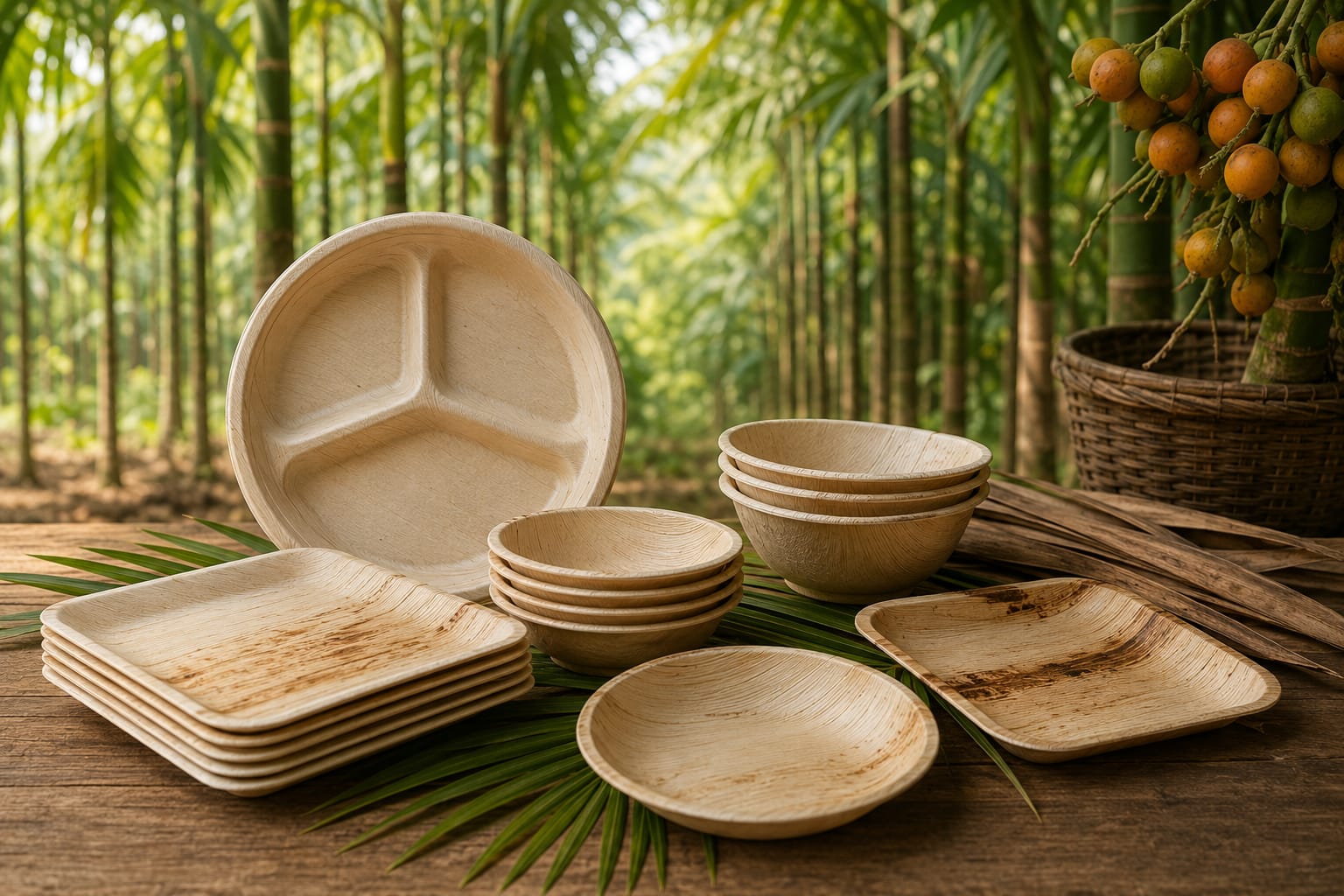
Walk through any village in South India or the forests of Assam, and you will find them scattered across the ground — broad, dry sheaths that have fallen naturally from areca palm trees. For centuries, local communities collected these fallen leaves to make disposable plates and bowls. No trees were cut. No chemicals were used. The leaf was cleaned, heated, and pressed into shape. The result was a sturdy, beautiful, completely natural piece of tableware.
That ancient practice is now at the heart of one of the most exciting sustainable packaging categories in the world.
What Exactly Is Areca Leaf Tableware?
The areca palm (Areca catechu) naturally sheds its leaf sheaths as it grows — typically one or two per month per tree. These fallen sheaths, also called spathe leaves, are collected from the ground without harming the tree in any way.
The manufacturing process is remarkably simple and chemical-free:
The collected leaf sheaths are cleaned with water to remove dirt and debris. They are then dried — either under the sun or in low-heat chambers — to bring moisture to the right level. The dried leaves are placed in hydraulic press moulds, where heat and pressure shape them into plates, bowls, trays, and other forms. The finished products are trimmed, cleaned once more, and packed.
No bleaching. No chemical treatment. No synthetic binding agents. What goes in is a fallen palm leaf. What comes out is a finished plate.
Why It Is Genuinely Remarkable
Most sustainable packaging products are a compromise — they ask you to accept slightly inferior performance in exchange for eco credentials. Areca leaf tableware is different. It does not ask for that compromise.
It is naturally strong. The compressed leaf fibre creates a rigid, dense structure that can hold wet curries, gravies, and heavy food without softening or collapsing. It handles food confidently.
It is heat resistant. Areca leaf plates can handle hot food directly — unlike many paper-based alternatives that become soggy or deform under heat.
It is completely waterproof for practical use. The natural oils in the leaf fibre create a surface that resists moisture well enough for normal food service use, without any plastic coating or lamination.
It is genuinely biodegradable. Buried in soil, an areca leaf plate breaks down completely within 60–90 days. It leaves no microplastics, no toxic residue, no trace. It returns to the earth the same way it came from it.
Each piece is unique. The natural grain pattern, colour variation, and texture of every plate is slightly different — a characteristic that premium hospitality operators have come to appreciate rather than avoid. In a world of mass-produced uniformity, there is something genuinely appealing about a plate that carries the mark of the natural world.
The People Behind the Leaf
What makes areca leaf tableware particularly meaningful is its supply chain.
The leaves are collected by rural workers — predominantly women — in farming and forest communities across Assam, Tamil Nadu, Karnataka, and other areca-growing states. Collection requires no machinery, no capital investment, and no technical training. It is accessible livelihood for communities that might otherwise have limited economic options.
The pressing and manufacturing units are typically small and decentralised — cottage-scale operations that bring income and employment directly into rural areas. When you purchase areca leaf tableware, you are not just buying a sustainable product. You are participating in a supply chain that supports India's agricultural communities in a direct and meaningful way.
This is precisely why Prithira Global sources areca leaf products from certified Indian manufacturers. The "From Indian Soil to Global Tables" philosophy is not just a tagline — it describes a real supply chain rooted in India's land and its people.
From Village Practice to Global Demand
Areca leaf tableware has quietly moved from a local tradition to a globally sought-after product. European and American markets — where consumers and regulators are pushing hard against single-use plastics — have developed significant appetite for natural, certified, compostable tableware.
The key certifications that export buyers look for include FDA food contact compliance for the US market, EU food contact regulations for European buyers, and SGS testing for independent quality verification. These certifications confirm what the product already demonstrates — that it is safe, clean, and genuinely natural.
Fine dining restaurants, boutique hotels, organic food brands, and catering companies in these markets are increasingly specifying areca leaf as their preferred premium compostable tableware. The rustic beauty of the product has become a brand statement — a visible signal to diners and customers that a business takes sustainability seriously.
What to Look for When Buying
Not all areca leaf products are created equal. Here is what to check:
Moisture content matters. Properly dried and processed leaves produce rigid, long-lasting plates. Under-dried products soften quickly when in contact with food. Always test with wet food before placing a large order.
Mould hygiene is critical. The pressing process should be done in clean conditions with well-maintained moulds. Poor mould hygiene can lead to fungal growth on the product surface, which is a food safety concern.
Certifications tell the truth. SGS testing, FDA compliance, and EU food contact standards are independently verified. A supplier who can produce these certificates has had their product objectively tested — not just claimed to be safe.
Natural variation is normal. Colour differences, slight texture variation, and irregular edges are characteristics of a genuine natural product — not defects. If every piece looks identical and perfectly uniform, question whether it is truly natural.
The Bigger Picture
Every time a restaurant, caterer, or food business switches from plastic or styrofoam to areca leaf tableware, several things happen simultaneously.
A fallen natural resource gets a useful second life instead of decomposing on a forest floor. A rural Indian worker earns income from a completely sustainable activity. A piece of plastic is avoided — with all the pollution, microplastic risk, and longevity that plastic brings. A piece of tableware is used, serves its purpose with dignity, and then returns quietly to the earth.
The areca leaf plate is not a futuristic technology or a laboratory invention. It is an ancient material, refined and made consistent enough for modern food service. In a time when the world is desperately searching for alternatives to plastic, it turns out that one of the best answers was always lying on the forest floor.
Prithira Global supplies premium areca leaf tableware — square plates, deep bowls, oval plates and rectangular trays — for HoReCa, catering, hospitality and export markets. Get in touch to request a catalogue or samples.